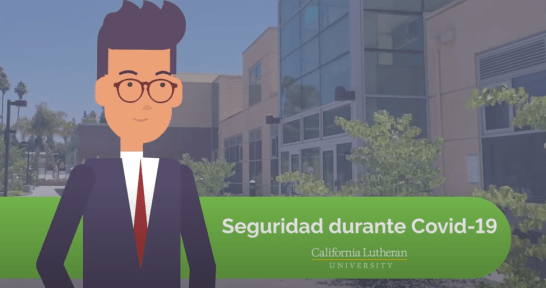
Being a voiceover is quite an experience: you become so hyper-focused on your dictation, pronunciation, speech speed, and more. While I am a comfortable and confident presenter, being a voiceover is something I never considered doing, simply because the opportunity had not presented itself. However, when I was asked if I was interested in being the Spanish voiceover for a new COVID-19 video campaign we were doing for the university, I was eager to give this a shot.
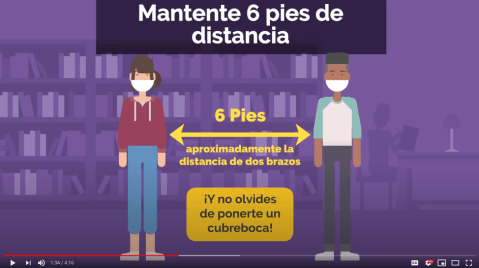
Student COVID-19 Safety Video
We began the project by translating the produced English scripts into Spanish. Once they were translated, the VERY detailed rehearsals came. As a native Spanish speaker, I have never paid so much attention to my pronunciation in my life. I quickly realized how differently spoken “house Spanish” is compared to “presentation Spanish”. When it comes to giving a speech, no matter the language, enunciating, articulating and exaggerating every single syllable is extremely important so your audience hears the content crisp and clearly. You don’t want to read the script so fast that your audience misses important details, but you also don’t want to read it so slow that they snooze through it. And as a natural fast-speaker this was quite the test for me to slow down! The amount of times I would repeat certain words and phrases just to get the pronunciation and flow as clear as possible was such an important learning experience.
Additionally, establishing the tone and flow of the script is essential to produce a good recording. Given that this script had a lot technical medical terms, it could be easily tuned out by the average listener who was tired of listening to many pandemic campaigns. I wanted the information to sound engaging and upbeat so viewers and listeners could actually process the information and take proper actions on how to combat COVID-19. While the scripts were written in different voices (usted versus tú) for the faculty/staff and student audiences, I still used the same upbeat tone throughout both videos. In the end, both of these recordings resulted in great audios to pair with the videos and members of the Cal Lutheran community can view them in their university portals.
Ser una locutora es toda una experiencia: te vuelves muy concentrado en tu dictado, pronunciación, velocidad de habla y más. Aunque me encanta presentar, ser locutora es algo que nunca consideré hacer, simplemente porque la oportunidad no se había presentado. Sin embargo, cuando me preguntaron si estaba interesada en ser la voz en español para un video sobre el COVID-19 qué estábamos haciendo para la universidad, estaba emocionada para intentarlo.
Comenzamos el proyecto traduciendo los guiones en inglés al español. Una vez traducidos, llegaron los ensayos MUY detallados. Como hablante nativa de español, nunca en mi vida había prestado tanta atención a mi pronunciación. Rápidamente me di cuenta de la diferencia entre el “español de la casa” con el “español de presentación”. Cuando se trata de dar un discurso, no importa el idioma, tienes que enunciar, articular y exagerar cada sílaba para que tu audiencia escuche el contenido de manera claramente. No querrás leer el guión tan rápido que tu audiencia se pierda detalles importantes, pero tampoco querrás leerlo tan lento que se duermen. ¡Y cómo hablante rápida, esto fue una gran prueba para reducir mi velocidad! La cantidad de veces que repetía ciertas palabras y frases solo para que la pronunciación y el flujo se oyeran lo más claros posible fue una experiencia de aprendizaje muy importante.
Establecer el tono y la fluidez del guión también es fundamental para hacer una buena grabación. Dado que este guión tenía muchos términos médicos, la audiencia al lo mejor ya estaba cansada de escuchar muchas campañas sobre la pandemia y podría desconectarse fácilmente. Quería que la información sonara atractiva y optimista para que la audiencia pudiera procesar la información y tomar las medidas adecuadas sobre cómo combatir el COVID-19. Aunque los guiones fueron escritos en diferentes voces (usted versus tú) para los empleados y estudiantes, utilicé el mismo tono optimista en ambos videos. Al final, ambas grabaciones resultaron en excelentes audios para los videos y los miembros de la comunidad de Cal Lutheran los pueden ver en sus portales universitarios.
 Genesis Rodriguez